This resource was developed by Volunteer Toronto.
The Volunteer Engagement Cycle (VE Cycle) is a practical tool that can help you plan your approach to working with volunteers. While not a one-size-fits-all method, the VE Cycle may determine areas of focus for creating an effective volunteer engagement strategy. Using the cycle can also support volunteer retention and satisfaction, while helping you reduce challenges from continual volunteer turnover.
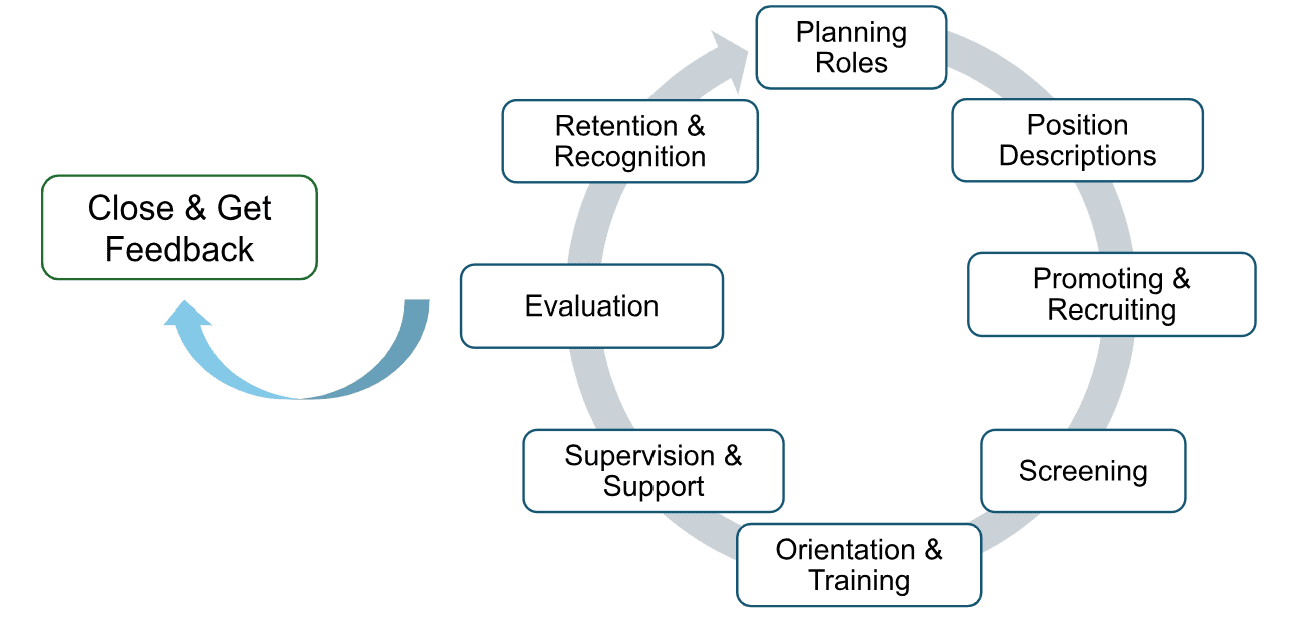
How you apply the VE Cycle in your organization will depend on your needs. However, the cyclical nature of volunteer engagement is a constant. You will always need to be aware of upcoming or ongoing volunteer needs, which begins the cycle anew.
Steps of the Cycle
1. Planning Roles: In the first step, think about why a volunteer is needed, and what volunteers would do in the role. Determine the risk(s) connected to the role. Read about how to clarify volunteer roles for more information.
2. Position Descriptions: Write position descriptions that clearly note the duties, responsibilities and expectations. View the Sample volunteer position description template to help guide this process.
3. Promoting and Recruiting: Seek out potential volunteers through your local volunteer centre, your own website and social media platforms, and other communities. Always include a clear call to action to invite candidates to apply.
4. Screening (or Selection): Based on the assessed risk of the role, screen volunteer candidates into your organization. This may include application forms or intake emails, interviews, or role shadowing.
- For high-risk roles, request a criminal record check at the end of the process. (If you’re in Ontario, here’s a tool that can help).
- For roles that require a level of trust and authority, reference checks may be appropriate. References, if requested, must be contacted and utilized appropriately.
5. Orientation and Training: Provide all information volunteers need to know to perform the role safely and effectively. Orientation may be an initial introduction to the organization, while training goes more in-depth.
6. Supervision and Support: Set guidelines, boundaries, and specific rules for volunteer roles. Make it clear that breaking rules has consequences, as with paid employment.
- If other staff are supervising volunteers that you have recruited and screened, ensure these staff are aware of the rules and expectations.
- Many volunteers are often unsupervised. Consider offering check-ins and connection points to provide support and address challenges.
7. Evaluation: Regularly provide positive and constructive feedback. Enable volunteers to give you feedback about their role, their supervisor, and the organization. Act on this feedback regularly to improve your overall approach.
8. Close and Get Feedback: Not every volunteer will stay with your organization. It’s ok for volunteers to leave, even if their commitment is not reached yet. Be encouraging and create an exit interview or survey to gather feedback.
9. Retention & Recognition: Identify volunteer successes and the impact volunteers make. Share highlights regularly and celebrate the efforts of volunteers.
- Retention is woven into every step of the cycle. Consider how to offer roles that are meaningful, and volunteers will continue to feel motivated (or tell you when they want to stop volunteering).

